Patients often hear from other dentists that they aren’t a good candidate for dental implants. In many cases, these patients are told they need to undergo extensive bone grafting surgery to qualify for implant treatment. But when they come to our office for a second opinion, they often find more options than they thought. At Brockley Dental Center, we use small-diameter dental implants. These titanium posts are much sleeker, fitting in less bone material and typically without the need for bone grafting. While not everyone is eligible for implant treatment, small-diameter implants make replacing teeth much more accessible. To find out if you qualify for implant treatment, book your initial consultation at our office in Butler, PA.
Small-Diameter Dental Implants
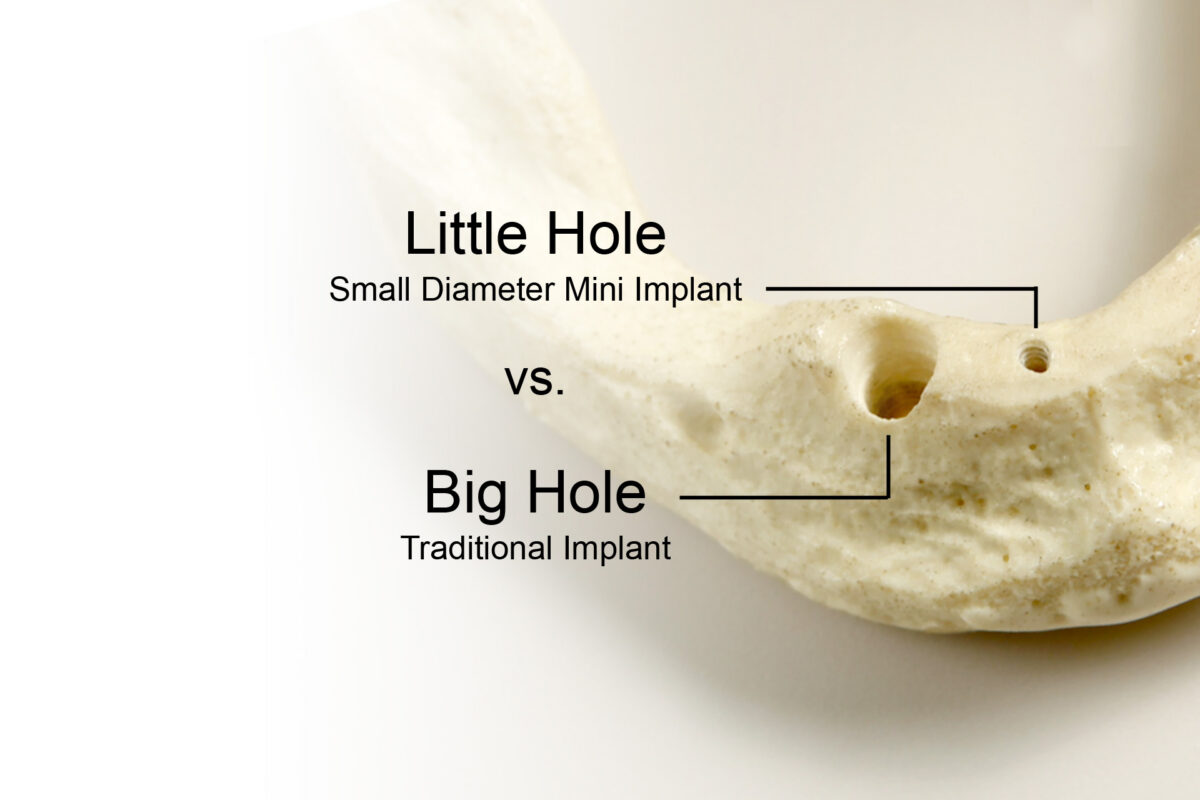
Traditional dental implants are typically between just over 3 mm and 8 mm in diameter. In contrast, small-diameter dental implants are anything 3mm or below!
To place traditional implants, we need to create a large osteotomy, or hole, in your bone. This opening needs to be about the width of the implant, making room for the screw to embed securely in your jawbone. However, not everyone has enough bone to support these titanium screws, as tooth loss causes jawbone loss over time.
Small-diameter implants require a much smaller osteotomy, as they have a significantly smaller diameter. In most cases, we simply make a small pilot hole in your jaw and through your gum tissue, avoiding the need for any incisions.
Additionally, the osteotomy is even a little smaller than the width of the implant, as these titanium posts are designed similarly to a self-tapping screw. Once we create an opening for the implant, we’ll gently screw it in, where the implant’s threads help embed it securely in your jaw. The small-diameter implant process is minimally invasive, resulting in faster healing and less post-operative discomfort.
In most cases, we find patients are eligible for smaller implant treatment without all the hassle.
You May Be a Candidate for Dental Implant Treatment!
Bone quality is only one aspect of candidacy for dental implant treatment. While it may be one of the most important aspects, there are other factors we need to consider.
Other factors that may impact your eligibility for dental implant treatment include:
- Periodontal disease: Gum disease is an inflammatory infection that spreads underneath your gums and affects your jawbone. While early effects of this disease can be reversed, you cannot regrow lost bone tissue. To qualify for dental implants, we’ll need to get any signs of gum disease under control.
 Uncontrolled diabetes: When well managed, diabetes doesn’t disqualify you from implant treatment. However, uncontrolled diabetes can affect your ability to heal and raise infection risks. We’ll need to get your diabetes under control before proceeding with implant treatment.
- Autoimmune disorders: Certain conditions, like lupus or rheumatoid arthritis, affect your ability to heal after oral surgery. Before proceeding with implant treatment, we’ll need to assess any risk of complications.
- Radiation treatments: Radiation for cancer that focused on the jaw or head area may compromise bone healing capacity, even years afterward. We’ll need to determine the quality of your bone before dental implant placement.
- Certain medications: Taking medications that suppress the immune system, using steroids, or taking long-term bisphosphonates to treat conditions like osteoporosis can affect bone quality and your ability to heal.
- Smoking habits: Nicotine restricts blood flow to the gums and bone, which is essential for healing after implant placement. Smoking after dental implant treatment can slow down your healing process and increase the risk of implant failure.
While none of these conditions automatically make you ineligible for dental implants, they can affect your eligibility. During your initial consultation with us, we will discuss your candidacy and try to find a solution that fits your lifestyle and budget.
Find Out If Small-Diameter Dental Implants Are Right for You!
If you’ve been told you’re not a good candidate for dental implants, we encourage you to visit our office in Butler for a second opinion. There, we’ll be able to assess your bone quality and determine if small-diameter dental implants are the right choice for you! In most cases, we find patients are eligible for smaller implants without trouble. But there are always exceptions, and we’ll need to review your medical history to ensure we can place these implants safely. Book your consultation with our office to learn if you’re a good implant candidate.
Follow us on Instagram and Facebook to better understand the implant placement process.
